Field note 03 / Building & learning
Prototype the question, not the pitch.

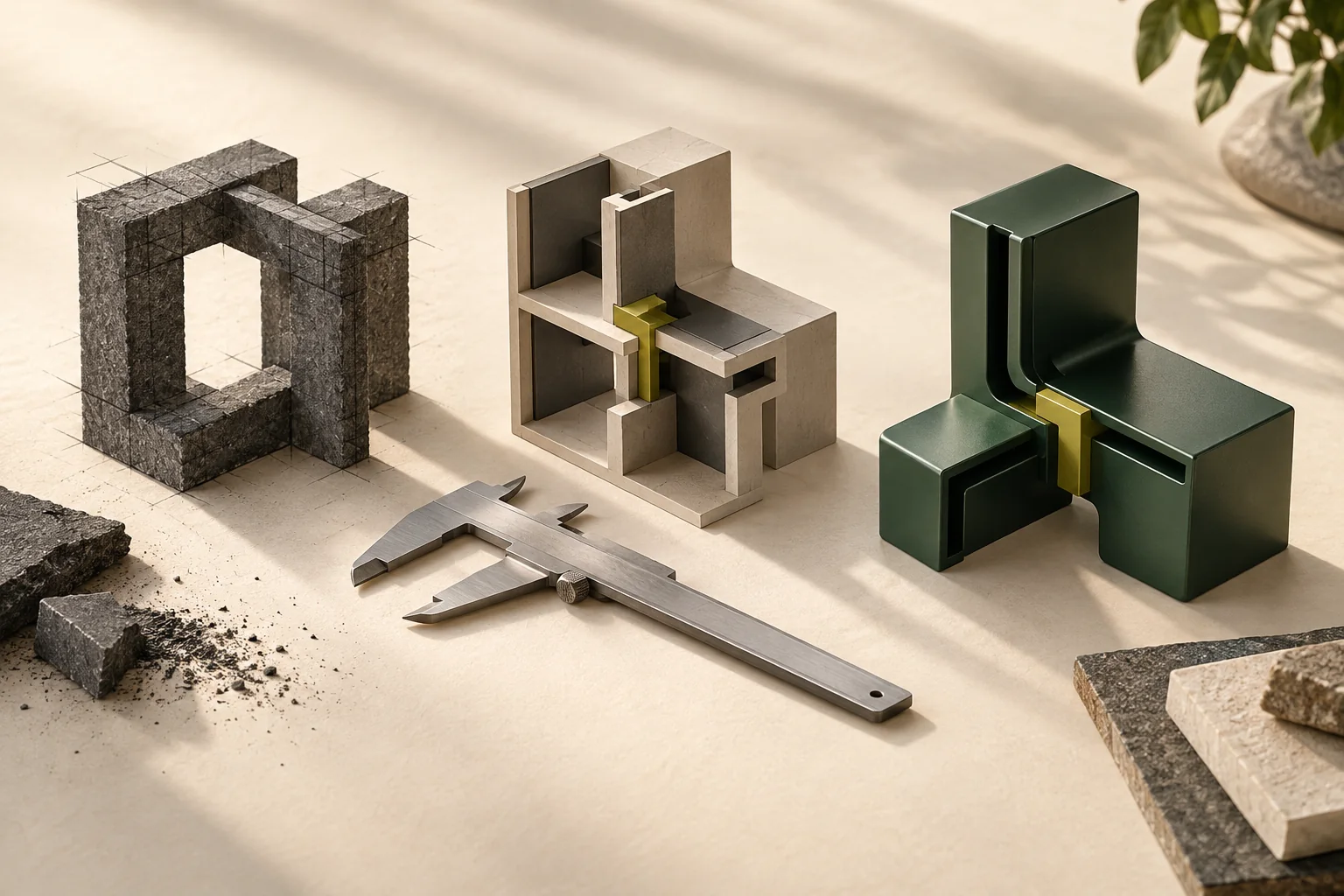
A compelling demo shows what could exist. A useful prototype helps a team decide what to do next. The difference starts with the question you choose before building.
Name the uncertainty.
“Can we build it?” often hides several different questions. Can the underlying system perform the task? Can a person understand the result? Can it fit into an existing workflow? Is the data available in the right form?
Choose the question with the greatest effect on the next decision. A narrow prototype that answers it can be more valuable than a polished experience that leaves every important assumption untouched.
Separate a demonstration from evidence.
This matters especially when applying AI. A selected example can demonstrate an interaction, but it tells us little about reliability across the situations a product will encounter.
Record the input, the expected behavior and the actual result. Include difficult cases as well as convenient ones. If you cannot yet define success clearly, that is useful information about the maturity of the problem.
Choose the smallest honest test.
A prototype does not need to reproduce every part of a finished product. It does need to make its shortcuts visible to the team evaluating it.
A manual step, a limited dataset or a simulated integration can be appropriate when it does not invalidate the question being tested. The important part is knowing which conclusion the test can support, and which it cannot.
End with a decision.
Before building, write down what you will do if the test works, if it fails and if the result is ambiguous. This gives the experiment a purpose beyond producing something impressive.
The best outcome is not always permission to build more. Sometimes it is a smaller scope, a different approach or a clear reason to stop. Each is progress when it replaces an assumption with something you learned.